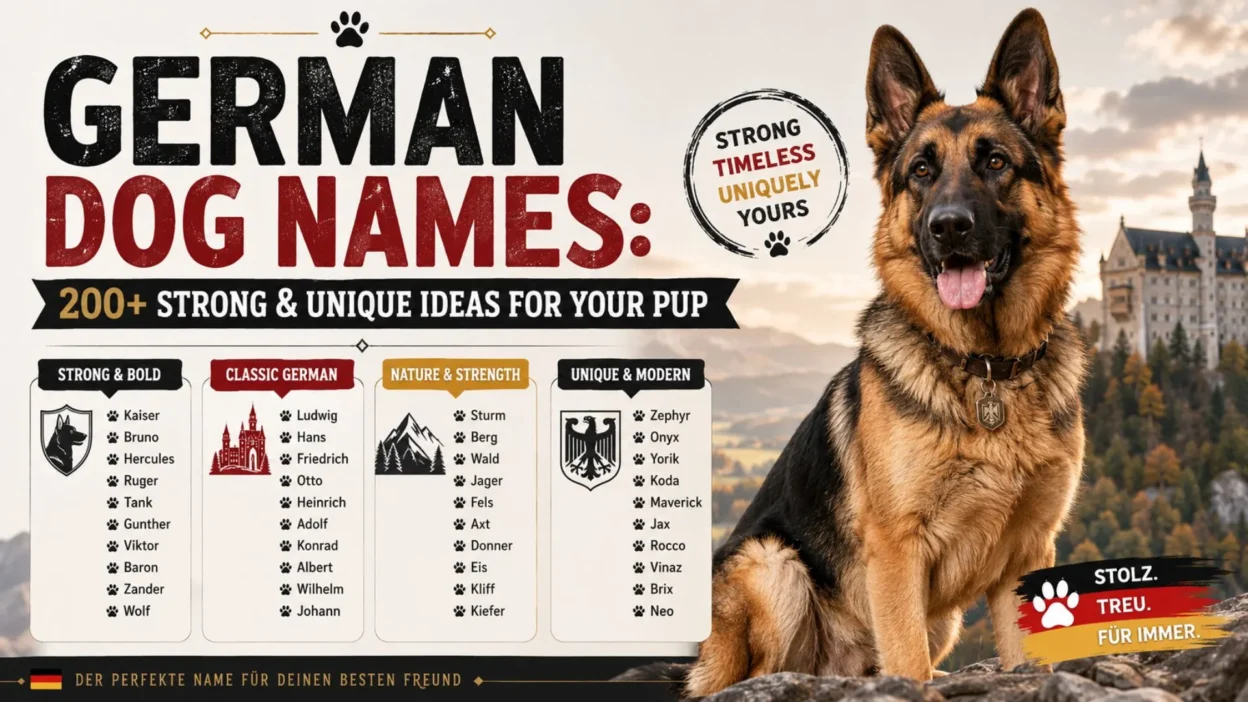
Choosing a name for your new dog is a big deal. It sticks with them for life. German dog names offer strength, history, and charm.
Many pet owners love these names for their bold sounds. They also carry deep meanings. From fierce protectors to gentle family dogs, there is a perfect German name waiting.
A Rich Heritage Behind German Dog Names
German naming traditions blend power with affection.
Germany has a long history of valuing dogs. They see them as working partners and loyal friends. This respect shows in their naming styles.
Many classic German names come from old myths. Others come from nature or strong human traits. For example, “Adel” means noble. “Berg” means mountain. These roots give names a solid feel.
You will also notice hard consonants like “k,” “t,” and “g.” These sounds make names crisp and clear. Dogs often respond well to such sharp sounds.
Why Pick a German Name for Your Dog
German names sound commanding yet loving at home.
First, many German names are short. One or two syllables work great for training. Dogs learn faster with brief, distinct calls.
Second, these names often have strong meanings. “Bruno” means brown, but also armor. “Greta” means pearl. You get beauty plus strength.
Third, German names stand out at the park. Fewer dogs share them. Your pet gets a unique identity.
Finally, they honor a culture known for discipline and loyalty. That fits any well-trained dog perfectly.
How to Choose the Right German Dog Name
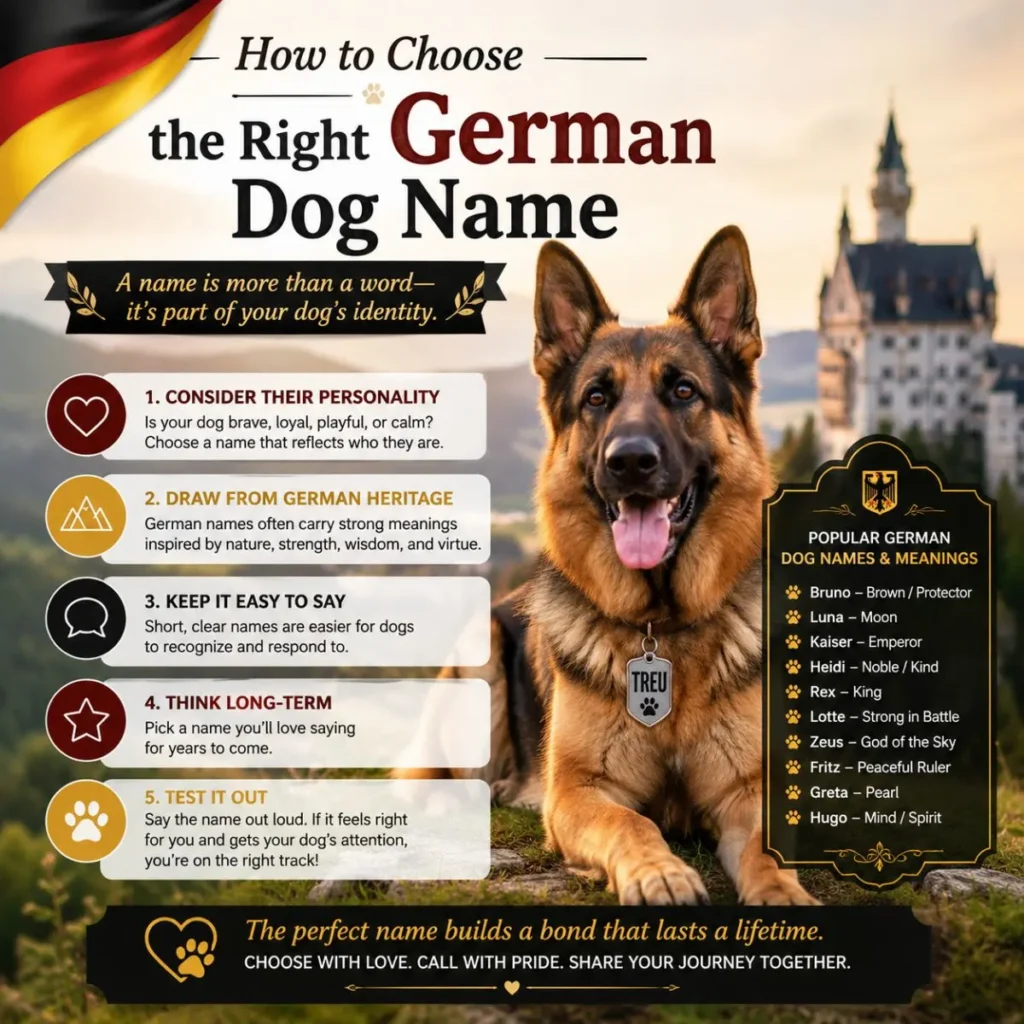
Match the name to your dog’s personality and looks.
Start by watching your dog for a day. Is she calm or wild? Does he have a dark coat or light fur?
For a shy dog, pick soft-sounding names like “Liesel” or “Fritz.” For a bold guardian, try “Kaiser” or “Blitz.”
Say the name out loud many times. Does it roll off your tongue? Can you shout it across a field?
Avoid names that sound like commands. “Sit” and “Fritz” are too close. This confuses dogs during training.
Test the name for a few days. See how your dog reacts. If they perk up, you found a winner.
Classic German Male Dog Names
Timeless choices that never go out of style.
Hans – Simple and strong. Means “God is gracious.”
Karl – Free man. Very traditional.
Franz – Free or Frenchman. Short and punchy.
Otto – Wealth. Only two syllables. Easy to call.
Gunther – Battle warrior. Great for protective breeds.
Heinz – Home ruler. Very common in old Germany.
Ludwig – Famous warrior. Perfect for regal dogs.
Wilhelm – Resolute protector. Strong and formal.
These names work well for German Shepherds, Rottweilers, and Dobermans. They also suit older rescue dogs with a wise look.
Classic German Female Dog Names
Elegant names with a vintage touch.
Greta – Pearl. Short and sweet.
Heidi – Noble one. Very friendly sound.
Brunhilde – Armored battle maiden. Great for brave dogs.
Liesel – God’s promise. Soft yet strong.
Trudi – Strength of a spear. Unique choice.
Ilse – Pledged to God. Simple and rare.
Frieda – Peaceful ruler. Calm energy.
Ursula – Little bear. Perfect for fluffy dogs.
Many of these end in “a” or “e.” That gives them a melodic feel. Dogs often respond better to vowel-ending names.
Strong and Powerful German Dog Names
For dogs that look tough and act tough.
Blitz – Lightning. Ideal for fast dogs.
Kaiser – Emperor. Commands respect.
Rex – King. Short and classic.
Thor – God of thunder. Norse-Germanic roots.
Wotan – Another name for Odin. Very powerful.
Siegfried – Victory and peace. Legendary hero.
Hagen – Enclosure or protector. Dark and strong.
Erika – Eternal ruler. Great for alpha females.
Use these for mastiffs, bulldogs, or any breed with a commanding presence. They also fit police or military dog lineages well.
Cute and Friendly German Dog Names
Soft sounds for sweet-natured pups.
Fritz – Peaceful ruler. Small and cute.
Lotte – Free woman. Very gentle.
Mila – Gracious or dear. Short and modern.
Emil – Rival. Tiny but mighty.
Leni – Light or torch. Bright and happy.
Toni – Priceless one. Unisex and loving.
Zelda – Gray fighting maid. Quirky and fun.
Kiki – Double sounding. Easy for puppies to learn.
These names fit lap dogs, puppies, and therapy dogs. They also work for mixed breeds with a playful nature.
Unique German Dog Names You Won’t Hear Often
Stand out from the crowd with rare picks.
Alois – Famous warrior. Old and uncommon.
Kuno – Bold or brave. Very short.
Lorelei – Alluring enchantress. From a rock on the Rhine.
Wendel – Wanderer. Soft and rare.
Anika – Grace. Sweet and unusual.
Jockel – Diminutive of Jacob. Playful sound.
Rike – Powerful ruler. Strong for females.
Veit – Life or forest. Very old German.
These names start conversations. People will ask about their origins. They also reduce confusion at busy dog parks.
German Names Inspired by Nature
Celebrate the outdoors with earthy names.
Wald – Forest. Great for woodland dogs.
Berg – Mountain. Strong and steady.
Feld – Field. Perfect for running breeds.
Stein – Stone. Solid and unbreakable.
Blume – Flower. Delicate for small dogs.
Regen – Rain. Calm and refreshing.
Sonne – Sun. Bright and cheerful.
Wind – Wind. Fast and free.
Nature names work for hunting dogs, hiking buddies, or any outdoor-loving pet. They also feel peaceful and organic.
Food and Drink Inspired German Dog Names
Fun names for food-loving pups.
Strudel – Pastry. Sweet and flaky.
Pretzel – Twisted bread. Very German.
Schnitzel – Breaded meat. Crisp sounding.
Kartoffel – Potato. Quirky for brown dogs.
Käse – Cheese. Short and silly.
Bier – Beer. For laid-back dogs.
Wurst – Sausage. Perfect for dachshunds.
Pflaume – Plum. Soft for purple-gray coats.
These make great nicknames. They are fun to say. Just remember that you will say them a thousand times. Choose wisely.
German Names for Large Dog Breeds
Big names for big dogs.
Bär – Bear. Fits giant breeds.
Koloss – Colossus. Huge and strong.
Riese – Giant. Very direct.
Donner – Thunder. Deep and booming.
Eisen – Iron. Tough as nails.
Fels – Boulder. Unmovable.
Goliath – Biblical giant. Classic choice.
Herkules – Hercules. Mythic strength.
Great Danes, Leonbergers, and German Mastiffs wear these names well. They match the dog’s impressive size and presence.
German Names for Small Dog Breeds
Tiny names for tiny paws.
Maus – Mouse. Adorable for little ones.
Winzig – Tiny. Very descriptive.
Punkt – Dot or period. Short and cute.
Funkel – Sparkle. Great for bright eyes.
Knopf – Button. Like a button nose.
Perle – Pearl. Precious and small.
Spatz – Sparrow. For energetic small dogs.
Zauber – Magic. Perfect for charming pups.
Pomeranians, Miniature Pinschers, and Dachshunds suit these names. They highlight small size without being demeaning.
Names from German History and Legends
Honor historical figures and myths.
Armin – Hero who defeated Roman legions.
Barbarossa – Red beard. Famous emperor.
Dietrich – Leader of the people. Legendary hero.
Kriemhild – Mythical queen. Strong female.
Lohengrin – Knight of the swan. Elegant.
Nibelung – Dwarf clan from myths. Mysterious.
Siegfried – Dragon slayer. Very powerful.
Tannhäuser – Poet and knight. Artistic.
These carry heavy stories. They suit history lovers. Use them for dignified or mysterious-looking dogs.
Modern and Trendy German Dog Names
Fresh names for contemporary pups.
Kai – Warrior or sea. Short and modern.
Juna – Desired or loved. Very trendy.
Matti – Gift of God. Friendly sound.
Nola – Fair shoulder. Sweet and simple.
Pepe – God will add. Playful and short.
Romy – Rosemary. Soft and stylish.
Timo – Honor. Fast and modern.
Yara – Butterfly or water lady. Unique.
These feel young and fresh. They work for designer breeds or rescues with a spunky attitude. Many are unisex too.
Hunting Dog German Names
Perfect for working and sporting breeds.
Jäger – Hunter. Direct and proud.
Falke – Falcon. Fast and sharp.
Horst – Eyrie or nest. Great for bird dogs.
Pfeil – Arrow. Quick and precise.
Spür – Scent or track. For hounds.
Weidmann – Huntsman. Traditional.
Bussard – Buzzard. For keen-eyed dogs.
Hirsch – Deer. For deer trackers.
German Shorthaired Pointers, Weimaraners, and hunting hounds love these names. They reflect the dog’s job and spirit.
German Names for Black Dogs
Mysterious names for dark-coated pets.
Schwarz – Black. Simple and bold.
Nacht – Night. Quiet and deep.
Kohle – Coal. Great for very dark fur.
Rabe – Raven. Smart and dark.
Dunkel – Dark. Mysterious sound.
Schatten – Shadow. Follows you everywhere.
Finster – Gloomy or dark. Edgy choice.
Samt – Velvet. For sleek, dark coats.
Black Labs, Schipperkes, and Black German Shepherds shine with these names. They emphasize the dog’s beautiful dark color.
German Names for White or Light Dogs
Bright names for pale coats.
Weiß – White. Clean and pure.
Schnee – Snow. Cold and crisp.
Mond – Moon. Gentle and soft.
Licht – Light. Very positive.
Perlmutt – Mother of pearl. Shiny.
Eis – Ice. Cool and sharp.
Kristall – Crystal. Clear and bright.
Hell – Bright or clear. Short and easy.
Samoyeds, White Swiss Shepherds, and light-colored Spitz dogs suit these well. They highlight the dog’s radiant fur.
Names Based on German Dog Traits
Match the name to common breed characteristics.
Treue – Loyalty. Best for faithful dogs.
Mut – Courage. For brave protectors.
Schnell – Fast. For speedy runners.
Wachsam – Watchful. For alert dogs.
Klug – Smart. For clever breeds.
Sanft – Gentle. For soft-tempered dogs.
Stolz – Proud. For regal postures.
Fröhlich – Cheerful. For happy, wagging tails.
These trait names describe exactly who your dog is. They also make great conversation starters with other owners.
How to Pronounce German Dog Names Correctly
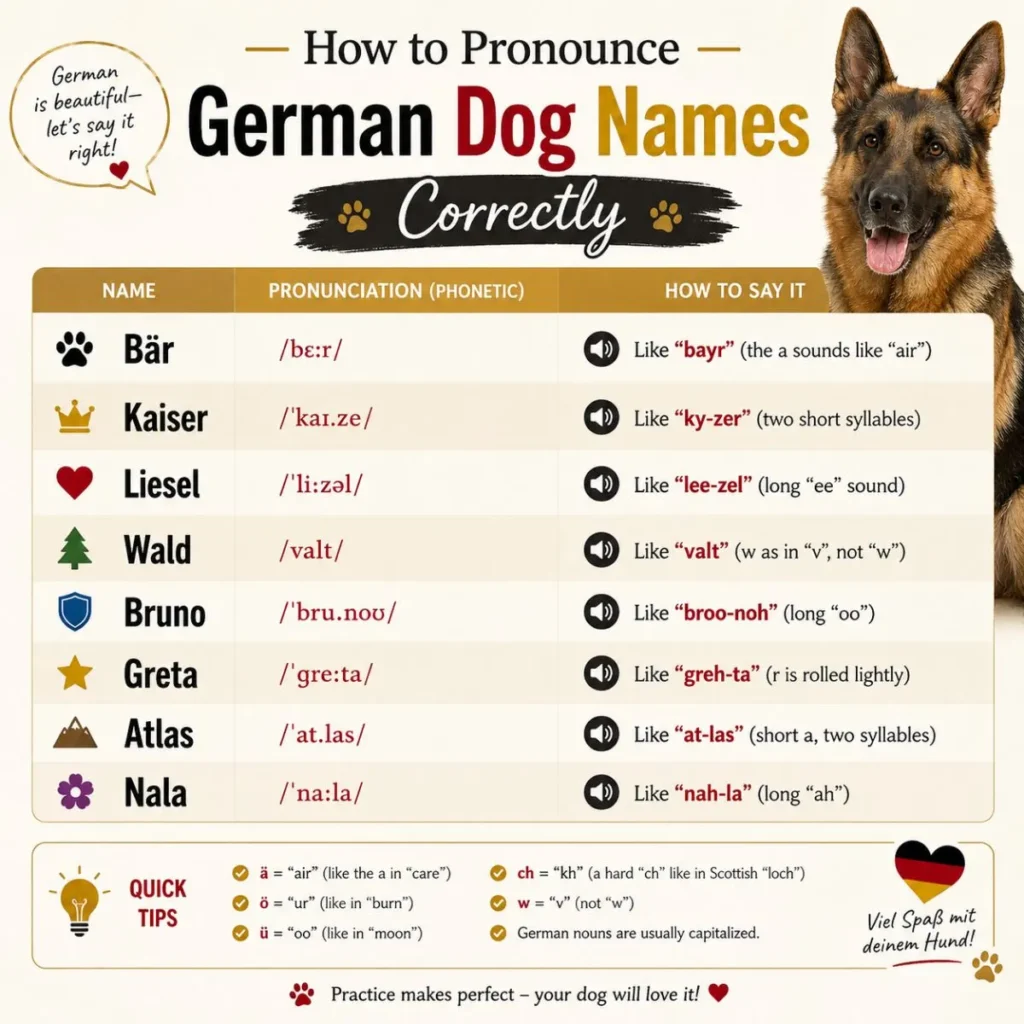
Good pronunciation helps with training.
German has some unique sounds. The “ch” is soft, like in “ich.” The “w” sounds like an English “v.”
For example, “Wald” is said like “Valt.” “Siegfried” is “Zeeg-freed.” “Jäger” has a hard “J” like “Yay-ger.”
Practice saying the name slowly. Then speed up. Your dog listens to tone and clarity more than exact accents.
If a name feels too hard, shorten it. “Brunhilde” becomes “Bruni.” “Gunther” becomes “Gunny.” Dogs adapt quickly.
Mistakes to Avoid When Naming Your Dog
Simple errors that cause long-term problems.
Never pick a name that sounds like a command. “Kit” sounds like “sit.” “Bo” sounds like “no.” This confuses your dog.
Avoid very long names. Three syllables max is best. Anything longer gets shortened anyway.
Don’t choose a name you feel embarrassed to shout. Test it in public. Shout it across your house. If it feels weird, change it.
Stay away from trendy human names that might offend. “Adolf” is clearly inappropriate. Use common sense.
Finally, don’t rush. Live with your dog for a few days. Let their personality guide you.
Teaching Your Dog Their New German Name
A step-by-step guide to name recognition.
Start in a quiet room. Say the name in a happy voice. When your dog looks at you, give a treat.
Repeat this 10–15 times per session. Do three sessions daily. Soon your dog will turn their head at the sound.
Use the name positively only. Never say it during punishment. You want a strong, happy association.
Once inside works, move to the yard. Add small distractions. Always reward attention.
After one week, most dogs know their name. Then you can add basic commands like “come” or “sit.”
Frequently Asked Questions
Are German dog names good for any breed?
Yes, any breed can have a German name. However, they fit working breeds especially well. German Shepherds, Rottweilers, and Dobermans look and sound great with them. Small breeds also suit cute German names like “Maus” or “Fritz.”
What is the most popular German dog name?
“Kaiser” and “Bruno” rank very high for males. “Greta” and “Heidi” lead for females. These names appear often in dog parks and vet offices across Germany and beyond.
Do German dog names help with training?
Often yes. Many German names have hard consonants. Dogs hear sharp sounds better. Short, one or two syllable names also grab attention faster during training sessions.
Can I use a human German name for my dog?
Absolutely. Names like “Hans,” “Karl,” “Greta,” and “Liesel” work wonderfully. Many dog owners prefer human names. They feel more personal and respectful.
What does “Blitz” mean in German dog names?
“Blitz” means lightning. It suits fast, energetic dogs. Many owners of racing breeds or very playful pups choose this name for its energy and short sound.
How do I know if a German name fits my dog?
Say the name for three days. Watch your dog’s reaction. If they respond positively and the name feels natural to you, it fits. Trust your instinct.
Are there German names for female dogs that sound strong?
Yes. “Brunhilde,” “Kriemhild,” and “Erika” all carry strength. They have warrior meanings or royal connections. These work well for alpha females or protective breeds.
What is the easiest German dog name to pronounce?
“Fritz,” “Hans,” “Greta,” and “Otto” are very easy. They use common English sounds. Most people say them correctly on the first try without practice.
Conclusion
German dog names bring history, strength, and charm to your pet. They range from fierce like “Blitz” to gentle like “Liesel.” Each name carries a meaningful story and a crisp sound that dogs easily recognize.
Take your time choosing. Watch your dog’s unique personality. Say the name aloud many times. The right German name will feel natural, sound beautiful, and serve you both well for years. Your loyal companion deserves a name as special as they are.
Read more related articles on NamesHubX.com.

Sophia Reed is a content writer at Nameshubx, passionate about discovering unique, stylish, and meaningful names. She shares creative naming ideas and trends to help readers find the perfect name.